Shipped 2026 · open source / active
Torpor for macOS
A native macOS menu bar app for people working across multiple Claude Code sessions. Torpor makes session memory use visible and lets you hibernate idle sessions, then return to the conversation when you need it.
- Native macOS app
- Session hibernate & revive
- Open source
- My role
- Design & development
- Selected stack
- Swift 6 · SwiftUI · AppKit · libproc
The delivered product
Explore the actual interface.
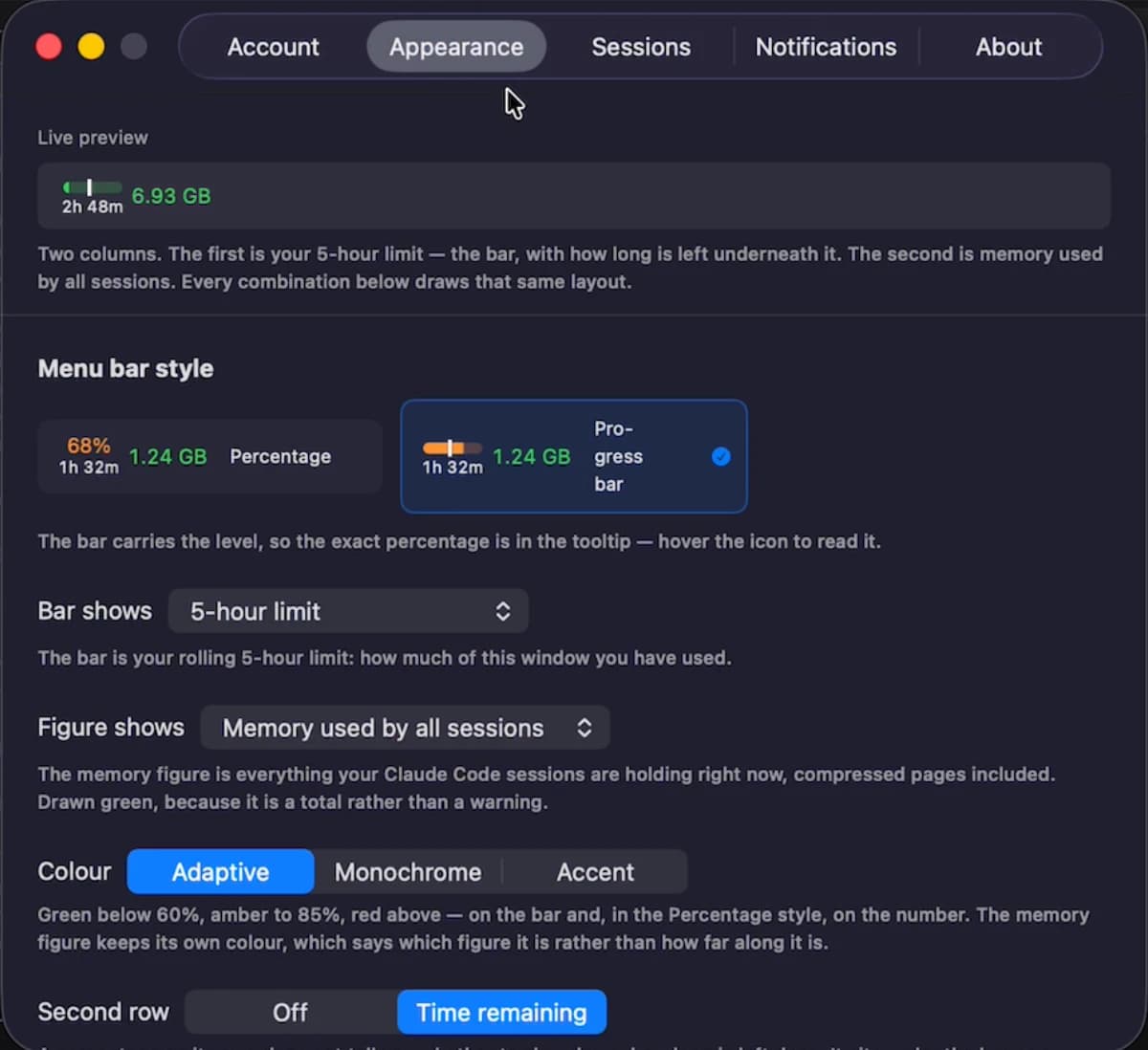
Which sessions are using the memory?
With several coding sessions open, I wanted to understand their memory footprint and decide which ones could be closed. The usual resident-memory figure did not tell the whole story for idle processes whose memory macOS had compressed.
Torpor uses macOS's physical-footprint measurement and discovers sessions through Claude Code's registry. That makes the implementation specific to how these sessions run, rather than relying only on a process-name match.
Inside the system
From an active session to one you can resume.
- 01
Find & measure
Read the session registry and measure phys_footprint.
- 02
Capture & hibernate
Save the command line and terminal before ending the process.
- 03
Revive the session
Resume using the saved command and terminal context.
Make the return path part of hibernation
Before ending a session, Torpor records its command line and terminal context. The revive path uses that saved information to resume the conversation with its original launch options.
The interface keeps the frequent actions close: inspect the sessions, choose an idle one, hibernate it, and bring it back later. SwiftUI and AppKit provide the native settings and menu bar experience.
- Session discovery through the Claude Code registry
- Memory measurement using macOS phys_footprint
- Saved command-line and terminal context for revival
- Native appearance and menu bar controls
A tool you can download and inspect
Torpor is available as an open-source macOS app. The repository includes the implementation, documentation, and releases; the screenshots above show the actual product.
It grew out of a practical problem in my own development workflow. The interesting engineering sits behind the small interface: process discovery, meaningful memory accounting, and the transition from an active session to one that can be resumed.
Your project
Need something
like this?
Tell me what your team needs to do and what is getting in the way.
Keep exploring
Other work.
AI & automation at GreenTomatoMedia
Human-reviewed support, image and voice conversation context, and configurable AI tools for content teams.
Full-stack development & deploymentGym operations across 5+ branches
Operations platform for a regional gym chain: geofenced staff attendance, scheduling, payroll adjustments, customer visit tracking, and stock across 5+ branches.
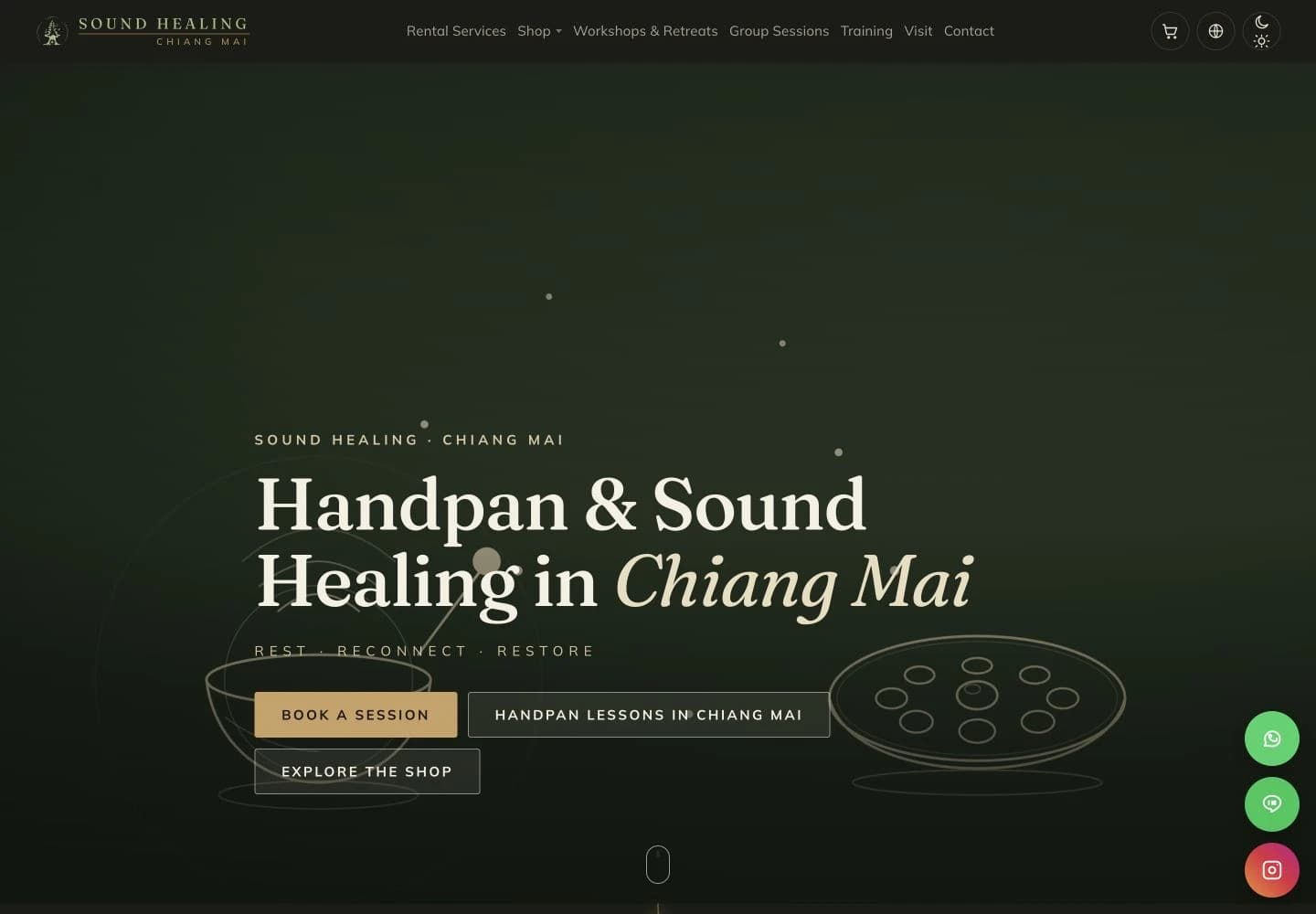
Sound Healing Chiang Mai
A wellness studio website with booking integration, a shop, rentals, and content in English, Chinese, and Thai.